

Growing Through Preservation: The Economic Impact of Historic Preservation in Philadelphia
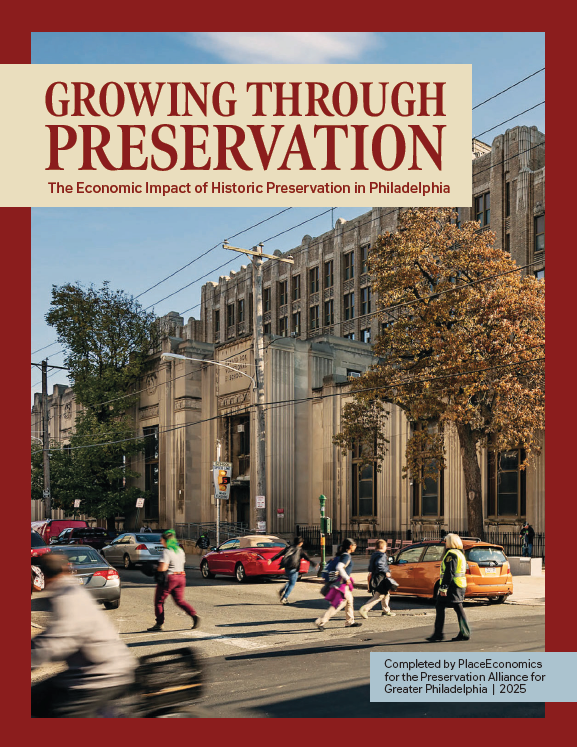
Location: Philadelphia, PA
Client: Preservation Alliance for Greater Philadelphia
Date: 2025
Philadelphia is one of the nation’s most historic cities, home to landmarks like the UNESCO World Heritage Site, Independence Hall, and dozens of 18th, 19th, and early 20th century neighborhoods that embody the country’s founding and industrial past. This historic character is not only central to the city’s identity but also to its economy.
Preservation is an economic engine in Philadelphia. Rehabilitation through historic tax credit projects fuels billions in investment, creates thousands of jobs, and generates millions in local tax revenue, making it a powerful force for reinvestment and citywide prosperity. Historic districts also contribute to economic vitality as locations of choice for businesses. These neighborhoods offer character-rich retail and office locations that vary in size and affordability, making them attractive to a diversity of small businesses, start-ups, creative industries, and technology companies.
Beyond its economic impact, historic preservation plays a vital role in Philadelphia’s housing and community life. Historic districts are among the city’s most densely populated and fastest-growing neighborhoods. The population living in historic districts is growing and changing in positive ways, gaining new residents and becoming more diverse over the last ten years. Additionally, Philadelphia’s older, undesignated housing stock provides critically important affordable housing options and is disproportionately home to Black and Hispanic Philadelphians.
From sites of worldwide significance to everyday rowhouses, Philadelphia’s historic fabric is both a cultural asset and a cornerstone of economic vitality. This analysis was commissioned to quantify the impact of historic preservation on neighborhood diversity, housing affordability, and building investment.